

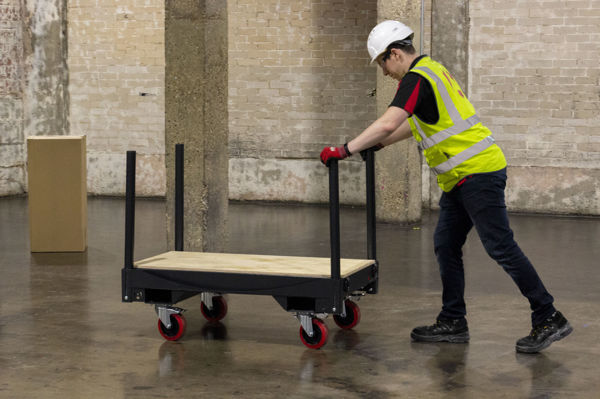
Trolley is the daily pulse of the quick flow of goods, tools, and materials between work areas without delays, disorientation, and effort. And in busy warehouses, distribution centres, retail back rooms and factories around Australia that rhythm relies on a deceptively simple implement – the platform trolley.
Time is often of the essence for managers and procurement teams pushing for a new wave of productivity, so they will typically first investigate software dashboards, lean-management principles, or staffing schedules. One area that many people downplay is that, more than almost any other metric, having the right platform trolley Brisbane— with the right accessories — and set up will determine how quickly, safely and precisely each and every material-handling job is completed. Any time you allow a model choice that lacks manoeuvrability, load rating limitations, or an acceptable height of the handle causes a hidden tax on every move. They tend to slow down, work at awkward angles, and spend valuable minutes troubleshooting jams or restacking the wobbly load.
On the other hand, a smooth trolley designed for that is a quiet partner — allowing people to slide along aisles, to protect themselves, and to redirect mental effort to work that adds value instead of battling with machinery. With razor-thin margins in Australian industry and perpetual labour availability hurdles, even small efficiency improvements compound quickly. A small increase in distance travelled per hour or loads moved per day can make for lighter overtime budgets, faster order delivery and happier customers – all adding up over the course of a financial year. This article breaks down the key factors that empower supervisors, dispatchers, and site owners to select a platform trolley that enhances performance instead of occupying storage space.
Platform trolleys can be understood as an engine of productivity
Without going into features and specifications, it is vital to understand the concept of a platform trolley as part of a larger material-handling system. Basically a trolley is a mobile version of the storage rack and the pallet jack. It fills the void between bulk transportation and point-of-use delivery, so products can get to packing benches, assembly stations or service counters without being carried. Once products leave a pallet, they are prone to being dropped, lost and repetitive-strain injuries.
A flat, stable platform alters that equation by creating a consistent surface over which cartons, tools, bins of small parts, or hospitality supplies can move. Workers deal with items just one time, secure loads, and roll them straight to the next value-adding process, which accelerates productivity. This eliminates double-handling, reduces back and forth traffic around forklifts, and shortens walk distances. Additionally, modern platform trolleys can be fitted with open shelving, cage sides, or clip-on accessories that turn them into mobile workstations. This means that in fast moving e-commerce fulfilment, an operator can pick, scan, pack and label orders all on one trolley run to removable cart instead of taking 3 ring trips to a static bench. We’ll restore it so that hospitality staff can push cutlery, linen, cleaning products up and down hotel corridors without breaking the flow of guests. When organisations see the platform trolley as no longer an afterthought but lump it into integral infrastructure, they achieve incremental but recurring productivity gains.
Essential Design Elements That Impact Daily Use
All trolleys from equip2go are not created equal, and when experienced workloads arrive, the difference between an entry-level and a presumetrolley becomes apparent. Start with the frame. Welded steel or aluminium of the highest grade is employed, ensuring a rigid structure so the frame will not flex, throwing loads out of balance or dragging wheels with them. Powder coating or anodising also provides additional defence against scratches, moisture and cleaning chemicals, something we see quite a lot of in most coastal Australian warehouses. Then take a look at the texture of the deck surface. Slightly corrugated or no-slip mats (which are easy to clean) do not slip and allow cartons to slide on them. Rubber or TPU edge bumpers protect walls, racking, and finished products while rounding corners.

