
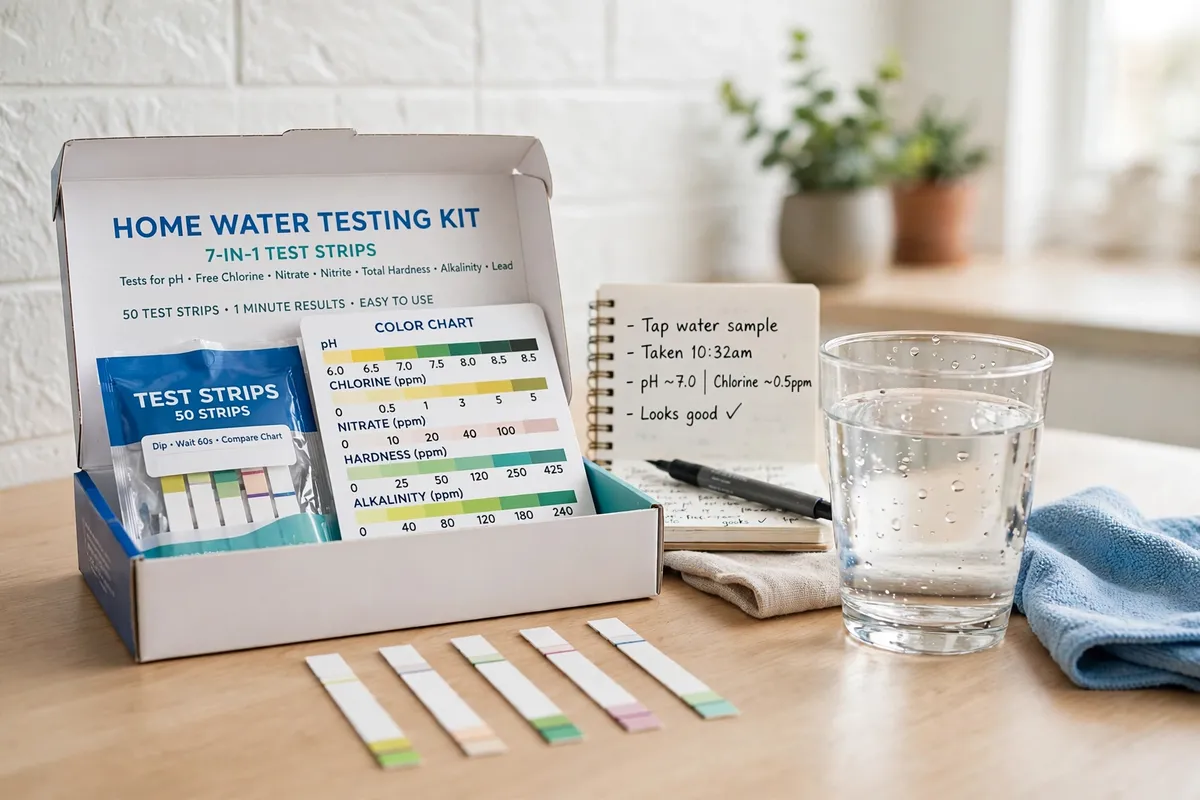
Learning how to test water quality at home is one of the simplest ways to protect your family and your plumbing. Clear water can still contain lead, bacteria, nitrates, or excess minerals, and water that tastes fine in one tap may be very different from water in another. With test strips, a home kit, or a certified lab test, you can check the most important contaminants, understand what the numbers mean, and decide what to do next.
Why You Should Test Your Water
Most city water is treated and monitored, but that monitoring happens at the treatment plant, not at your kitchen tap. Old pipes, lead service lines, corroded fixtures, private wells, and even a new filter can change what comes out of the faucet. Well water is not treated by a city at all, so the homeowner is responsible for testing it. Test after moving into a new home, after plumbing work, after a flood or long vacation, if the water changes color, taste, or smell, or if someone in the household is pregnant, very young, elderly, or has a weakened immune system.
What Should You Test For?
The right tests depend on your water source, the age of your home, and local risks. Start with the basics that affect health and taste, then add specialist tests if you have a reason to worry. For city water, lead, chlorine, pH, hardness, and total dissolved solids are a sensible starting point. For well water, add bacteria, nitrates, and nitrites. If you live near farms or industry, ask a lab about pesticides and arsenic. Learning about substances that can reach drinking water helps you choose wisely, as explained in What Are The Chemicals That Are Causing Water Contamination?
- pH: how acidic or alkaline your water is; very low or high pH can corrode pipes and affect taste.
- Lead and copper: metals that can leach from old pipes and fixtures, especially after water has sat overnight.
- Bacteria: total coliform and E. coli indicate possible contamination from sewage or surface water.
- Nitrates and nitrites: common in farm areas and a particular risk for infants.
- Chlorine, hardness, and total dissolved solids: affect taste, scale buildup, and how well soap and appliances work.
Methods Compared: Strips, Kits, and Lab Tests
No single method is best for every question. Strips are fast and cheap, home kits are more detailed, and lab tests are the most accurate. Use the table below to match the method to your goal, budget, and level of concern.
| Method | Best for | Typical cost | Speed | Accuracy |
|---|---|---|---|---|
| Test strips | Quick screening for pH, chlorine, hardness | Low | Minutes | General range only |
| Home test kit | Several contaminants at home | Moderate | Minutes to days | Good for screening |
| Certified lab test | Lead, bacteria, nitrates, full safety check | Higher | Several days | Highest |
How to Test Water Quality With Test Strips
Test strips are the easiest way to start. Buy strips that cover the contaminants you care about, check the expiry date, and store them in a cool, dry place. Run the cold tap for 30 seconds to two minutes, fill a clean glass, and dip one strip for the time stated on the packet, usually a few seconds. Hold it flat, wait for the colors to develop, and compare each pad to the chart immediately, in good light. Do not touch the pads, reuse a strip, or wait too long to read it, because colors keep changing. Record the result and the date. Strips give ranges rather than exact numbers, so confirm any worrying result with a kit or lab test.
How to Use a Home Water Test Kit
Home kits may use strips, liquid reagents, or vials that change color, and some include a digital meter for total dissolved solids or pH. Read the instructions first, because each contaminant may need a different sample or waiting time. Collect a fresh sample in the container provided, add the reagent exactly as directed, and compare the color or meter reading to the chart. Some kits are mail-in kits: you fill the bottles, return them by post, and receive a lab-style report online. Keep the instructions and lot number with your results so you can repeat the same test later and compare fairly.
How to Test Water Quality in a Lab
For lead, bacteria, or any result that could affect health, a certified drinking-water laboratory is the gold standard. Search for an accredited lab in your region, or ask your local health department for a list. For lead, you may need a first-draw sample after water has sat in the pipes for at least six hours, without flushing first. For bacteria, use the sterile bottle provided and return it promptly, usually within 24 to 30 hours, keeping it cool. Label every bottle, note the tap and time, and do not rinse a sterile bottle. The lab report will list each contaminant, your result, and the safe limit.
How to Read and Understand Your Results
A result is only useful if you compare it with a safe limit and with your previous results. Check the unit, usually milligrams per liter or parts per million, and look for the maximum contaminant level set by your regulator. A pH between about 6.5 and 8.5 is generally acceptable, while lead has no safe level and should be as low as possible. Hardness and total dissolved solids are mainly about taste and scale, not immediate safety. If one tap is much worse than another, the problem may be in that fixture or pipe rather than the whole supply. When in doubt, repeat the test and contact your water provider or health department before buying expensive treatment equipment.
The Extra Angle: Keep a Water Test Log and Retest Calendar
Most guides treat testing as a one-off task, but water quality changes over time, and that is the angle many competitors miss. Start a simple test log with the date, tap, method, result, and any notes about plumbing work, storms, or taste changes, and photograph each strip next to its chart. Then follow a retest calendar: test city water at least once a year, test well water at least once a year for bacteria, nitrates, and pH, and retest after any plumbing change, flood, or long period away. If a result is poor, use a 48-hour action plan: stop drinking from that tap if bacteria or lead is suspected, use bottled water, retest or send a lab sample, and contact your provider or a plumber. A log also helps renters and buyers, because you can show a landlord or seller a dated record. Keeping your home in good order matters here too, as covered in Must-Have Bathroom Disinfectants and Insect Controls for Every Household.
Common Mistakes to Avoid
The most common errors are simple and avoidable. Testing only hot water, using an expired strip, touching the test pads, or sampling after a filter can all give a false sense of security. Do not test water that has been sitting in a garden hose, and do not assume a whole-house filter removes lead or bacteria unless it is certified for that contaminant. Free tests offered by companies selling treatment systems can be useful, but always confirm a sales-linked result with an independent lab. If your home needs work after a poor result, plan it carefully, as noted in 5 Signs Your Bathroom Is In Desperate Need of an Upgrade.
Frequently Asked Questions
How can I test my water quality at home for free?
Start with your water provider’s annual quality report, which is free for city customers, and ask your local health department about free or low-cost lab testing, especially for lead or well bacteria. Confirm any concerning result from a free screening with an independent test before buying equipment.
Are home water test strips accurate?
Strips are accurate enough for screening pH, chlorine, and hardness within a range, but they are not precise enough to rule out lead or bacteria. Use them for regular checks and trends, and use a certified lab test for health-critical decisions.
How often should I test my well water?
Test well water at least once a year for bacteria, nitrates, and pH, and more often after flooding, nearby construction, or changes in taste, color, or smell. Test for lead and other metals if your plumbing is old or if a previous result was close to the limit.
What is the best way to test for lead in drinking water?
Use a certified lab test with a first-draw sample, taken after water has sat in the pipes overnight and before flushing. Home lead strips can screen for high levels, but only a lab result is reliable enough to decide on filters, pipe replacement, or medical advice.
Can I test water quality without a kit?
You can notice warning signs without a kit, such as cloudiness, a metallic taste, a chlorine or rotten-egg smell, blue-green stains, or scale buildup. These signs are useful clues, but they cannot confirm safety, so follow them up with strips, a home kit, or a lab test.