
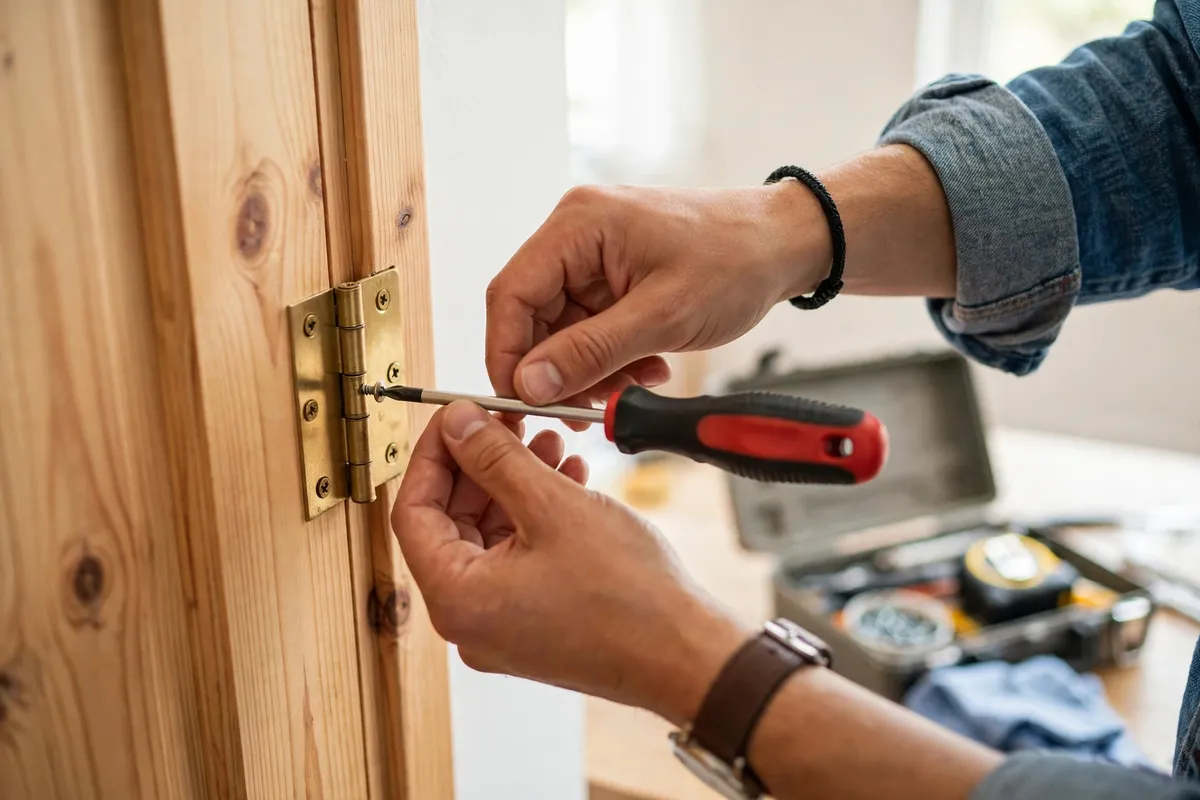
Learning how to fix a sagging door can end the daily scrape, the sticking latch, and the door you have to lift to close. A sagging door rarely fails all at once. It drops slowly as screws loosen, wood compresses, and hinges wear. Most sagging doors can be fixed in under an hour with basic tools, without removing the frame or buying a replacement door.
This guide shows how to diagnose the real cause, tighten or replace hinge screws, shim a hinge, plane a swollen edge, and adjust the strike plate. It also covers the angle most quick guides miss: how to tell whether the problem is the door, the frame, house settling, or seasonal humidity.
Why Doors Sag in the First Place
A door hangs from only two or three hinges, and gravity pulls constantly on the side farthest from them. That leverage works screws loose, especially in the top hinge, which carries most of the weight. Softwood frames, short factory screws, heavy solid-core doors, and doors that are slammed all make sagging more likely. Moisture also matters: wood swells in humid weather and shrinks when winter heating dries indoor air.
How to Diagnose a Sagging Door in Five Minutes
Open the door halfway and let go. If it swings on its own, the frame or hinges are out of plumb. Next, look at the gap around the door, called the reveal. It should be even, about 3 millimetres wide, on the top and both sides. A gap wide at the top on the latch side and narrow at the bottom usually means the top hinge has dropped.
Lift the door by its handle. If it moves up noticeably, the hinges are loose. A screw that spins without tightening has stripped its hole. Look for cracked paint, split wood, or a hinge leaf pulling away from the frame. Close the door slowly and note where it catches: rub marks, a latch that misses the strike plate, and a dragging bottom corner each point to a different fix.
Tools and Materials You Will Need
You will need a Phillips screwdriver, a drill or driver, 75-millimetre wood screws, wooden golf tees or dowels, wood glue, hinge shims, a pencil, a spirit level, sandpaper, and a hand plane if you need to trim an edge. Support a heavy door with a wedge while you work.
Fix by Symptom: Choose the Right Repair
Use this table to match what you see to the fastest reliable fix.
| Symptom | Likely cause | Best first fix | Time |
|---|---|---|---|
| Door lifts when you raise the handle | Loose hinge screws | Tighten screws, then fit longer screws | 10 to 20 minutes |
| Wide gap at top, latch side | Top hinge dropping | Shim the bottom hinge | 20 to 30 minutes |
| Door sticks only in summer | Humidity swelling | Plane or sand the edge and seal it | 30 to 45 minutes |
| Screw spins in its hole | Stripped screw hole | Fill with glued dowel, then re-drill | 30 minutes plus drying |
| Latch misses the strike plate | Door has dropped slightly | Shim the door or adjust the strike plate | 15 to 30 minutes |
Method 1: Tighten the Hinges and Fit Longer Screws
Start with the simplest fix. Tighten every hinge screw, working from the top hinge down, and test the door after each one. Do not overtighten, or you can strip the wood. If a screw will not hold, replace it with a 75-millimetre screw that reaches through the frame and into the wall stud behind it. This often lifts a sagging door by several millimetres. Remove only one screw at a time, so the door stays supported.
Repairing a Stripped Screw Hole
When a screw spins freely, its hole is too large to grip. Coat a wooden golf tee or short dowel in wood glue, tap it into the hole, and trim it flush once dry. Drill a small pilot hole, then drive the new screw into solid wood. This lasts longer than filler alone, because the threads bite into real timber.
Method 2: Shim a Hinge to Lift the Door
Shimming changes the door angle without moving the frame. To lift the latch side, place a thin shim behind the bottom hinge leaf, between the hinge and the frame. To lower the latch side, shim the top hinge instead. Cardboard works for a test shim, but purpose-made plastic or wood shims last longer.
Unscrew the hinge leaf from the frame only, not from the door, trace around it on the shim material, and cut the shim to size. Add one shim at a time and test the close. For more detail on hinge types and finishes, see our galvanised piano hinges guide.
Method 3: Plane or Sand a Door That Rubs
If the door rubs in one spot, mark the spot with a pencil while it is closed, then plane that area lightly, testing often. You cannot easily put wood back, so take off a little at a time. Seal bare wood with paint or varnish afterwards, or moisture will swell it again. Do not plane the hinge side without checking the gaps carefully, as that can make the door loose in the frame.
Method 4: Replace a Worn Hinge or Adjust the Strike Plate
Bent, rusted, or worn hinge pins can let a door drop even when screws are tight. Replace hinges one at a time, matching the size, screw pattern, and finish of the old ones, and make sure the new leaf sits flush in its recess. If the latch sits just below the strike plate opening, file the lower edge of that opening slightly, or move the plate down a few millimetres and fill the old screw holes. Test the lock and latch afterwards.
The Angle Most Guides Miss: Frame, Foundation and Humidity
Here is the extra angle competitors usually skip. A sagging door can be an early warning sign, not just a door problem. If several doors in one part of the house start sticking at the same time, if cracks appear above door frames, if floors feel uneven, or if a door fine in winter sticks badly in summer, the frame or the building may be moving.
Check the frame with a spirit level on both sides and across the top. A frame out of plumb by more than a few millimetres, a door that binds after rain, or a gap that returns weeks after a hinge repair all suggest a wider cause. Seasonal humidity is the most common wider cause and the easiest to manage: use a dehumidifier in damp rooms, keep bathroom doors ventilated, and seal bare door edges.
Keep a simple seasonal routine: check hinges each spring, tighten screws before humid summer months, and re-check gaps in autumn when heating dries the air. Note which doors move and when, so you can spot a pattern. If you suspect foundation movement, large cracks, or a badly twisted frame, get a professional assessment before planing or forcing the door. A door repair should never hide a structural problem. This diagnostic habit also helps with wider home improvement projects around the house.
When to Call a Professional
Call a carpenter or builder if the frame is rotted, split, or twisted, if the door is a fire door or external security door, if the wall around the frame is cracked, or if hinge and shim repairs have not held. Renters should check their lease before planing or replacing hinges, and keep the original parts.
Preventing the Next Sag
Use three hinges on heavy or tall doors, fit long screws into the stud at the top hinge, and avoid hanging heavy bags or over-door hooks from a hollow-core door. Tighten hinge screws once a year, lubricate squeaky pins with a drop of light oil, and seal edges after any trimming. For fresh ideas on the rooms around your doors, see our outdoor living ideas.
Frequently Asked Questions
How do I fix a sagging door without removing it?
Tighten the hinge screws while the door is supported, then replace one top-hinge screw at a time with a longer screw that reaches the stud. If that does not lift the door enough, shim the bottom hinge.
Why does my door sag again after a few weeks?
The screw holes may be stripped, the frame may be moving, or humidity may be swelling the door. Check whether screws still grip, whether the frame is level, and whether the problem follows the seasons.
Should I shim the top or bottom hinge?
Shim the bottom hinge to lift the latch side, and shim the top hinge to lower it. Add one thin shim at a time and test the close.
Can I fix a sagging door with longer screws alone?
Often, yes. A 75-millimetre screw in the top hinge anchors the door to the stud behind the frame. If the door is warped, the frame is twisted, or the hinge is bent, longer screws alone will not be enough.
How much does it cost to fix a sagging door?
A do-it-yourself repair usually costs only screws, shims, and glue, often under a few dollars if you already own a screwdriver. A professional rehang or frame repair costs more, so get a quote before agreeing to frame work.
A sagging door is annoying, but it is also a useful clue. Fix the hinge, shim, or edge causing the drop, check the frame and humidity pattern behind it, and finish with a sealed edge and a yearly hinge check.