
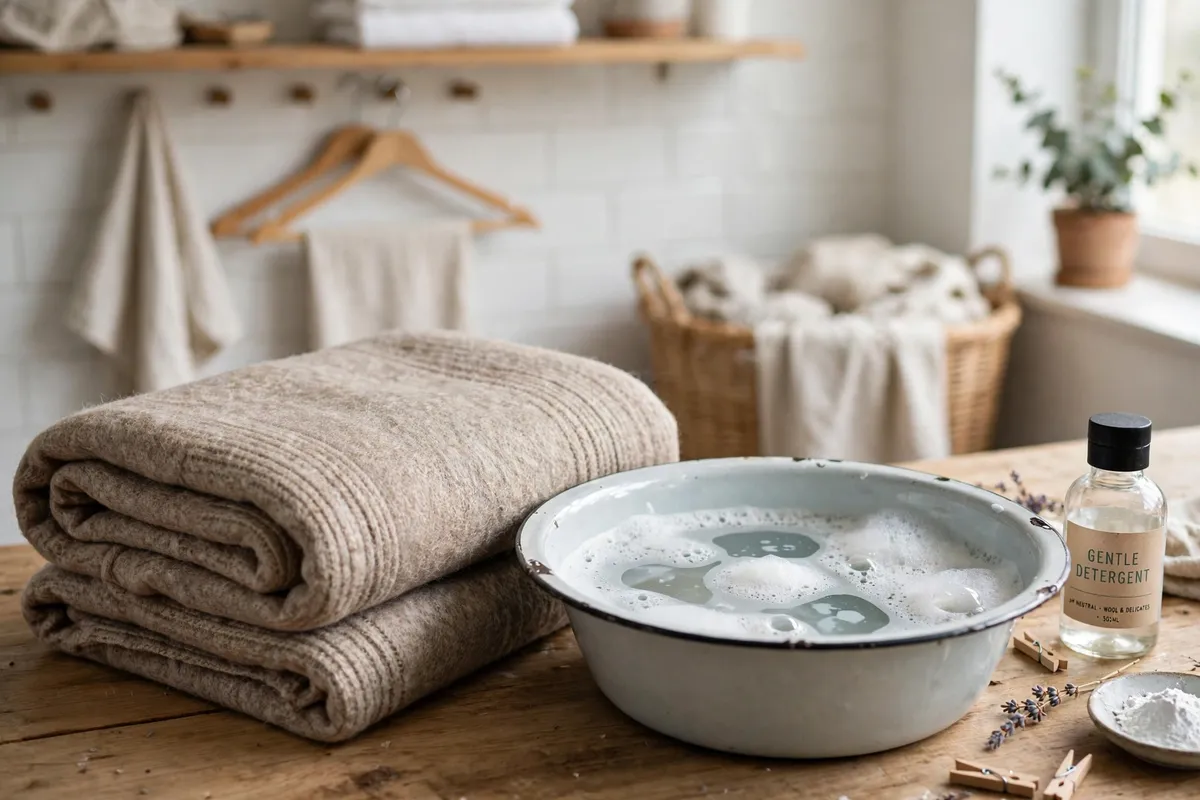
A wool blanket is warm, breathable, and made to last, but one hot wash can ruin it. Learning how to wash wool blanket fibres correctly is the difference between a soft, full-size blanket and a stiff, shrunken one. Wool felts when heat, agitation, and temperature changes combine, so keep the water cool, keep the movement gentle, and never force the blanket to dry quickly.
This guide covers hand washing, machine washing, drying, stain removal, and storage, plus a measure-first method that most guides skip. If you measure before you wash, you will know at once whether anything changed, and you will have a plan if a blanket has already shrunk.
Before You Wash: Read the Label and Check the Wool
Start with the care label. If it says dry clean only, follow that advice, especially for a tailored, lined, or very valuable blanket. If it says hand wash or machine wash on a gentle cycle, you can wash it at home with care. Merino is finer and more delicate than a thick woven blanket, but the same basic rules apply: cool water, gentle detergent, and no harsh agitation.
Inspect the blanket before washing. Shake it outside, look for loose seams or small holes, and repair them first, because water and movement can make a tear worse. Brush off surface dirt and remove pet hair. If it smells musty, air it outside in shade for a few hours. Sunlight can fade colour, so shade is safer. If the blanket is dyed, press a damp white cloth on a hidden corner to test for colour transfer, and wash it alone if colour comes off.
How to Hand Wash a Wool Blanket
Hand washing is safest for most wool blankets, especially large, heavy, or hand-knitted ones. You need a clean bathtub or large basin and a wool-safe or gentle liquid detergent.
- Fill the tub with cool or lukewarm water, no warmer than 30 degrees Celsius. Add a small amount of wool detergent and stir until it dissolves.
- Submerge the blanket and press it gently into the water. Do not twist, wring, or scrub it. Let it soak for 10 to 20 minutes.
- Move it slowly through the water, lifting and pressing to release dirt, with extra care at edges and folds.
- Drain the soapy water. Refill with clean water at the same temperature and rinse by pressing gently until the water runs clear.
- Lift the blanket out in a bundle, supporting its full weight. Do not let it hang and stretch.
- Roll it in clean, dry towels to press out water, repeating with dry towels until it is damp, not dripping.
- Lay it flat to dry, reshaping it to its original size, and turn it once or twice as it dries.
Keep wash and rinse water at a similar temperature.
How to Machine Wash a Wool Blanket
Some wool blankets can go in the machine, but only on the right settings. Use a wool, hand-wash, or delicate cycle, cold water, and a gentle spin. Wash the blanket alone, in a large mesh laundry bag if you have one, so it has room to move. Use wool detergent, and skip fabric softener and bleach, which can coat or damage fibres.
Do not use a normal or hot cycle, or add jeans to the load. An agitator top-loader is harsher than a front-loader, so hand washing is safer there. Remove the blanket promptly, roll it in towels, and lay it flat to dry.
How to Dry a Wool Blanket Without Shrinking It
Drying is where many blankets shrink, even after a careful wash. Heat is the main risk, followed by hanging a wet blanket so gravity stretches it out of shape. Lay it flat on a drying rack, mesh screen, or dry towels, and reshape it while damp, smoothing corners and straightening edges.
Keep it away from radiators, heaters, and direct sunlight, with good airflow around it. Turn it over once the top feels dry, and let the other side dry fully before folding or storing it. A thick blanket can take a day or longer, especially in a humid room. Do not store a blanket that still feels cool or damp in the middle, because trapped moisture can cause a musty smell.
Washing Methods at a Glance
| Method | Water temperature | Best for | Main risk to avoid |
|---|---|---|---|
| Hand wash | Cool to lukewarm, up to 30 degrees Celsius | Most wool blankets, delicate and large blankets | Wringing, twisting, and hot water |
| Machine, wool cycle | Cold | Blankets labelled machine washable | Heat, agitation, and a fast spin |
| Dry clean | Professional cleaning | Dry-clean-only, lined, or valuable blankets | Home washing against the label |
| Spot clean only | Cool water on a cloth | Small marks between full washes | Soaking the whole blanket for one stain |
How to Remove Stains From a Wool Blanket
Act quickly, but gently. Blot a fresh spill with a clean cloth instead of rubbing it, because rubbing pushes the stain deeper and can felt the surface. For food or drink, dab with cool water and a small amount of wool detergent, working from the outside edge toward the centre. Rinse by blotting with clean water, then press dry with a towel. For mud, let it dry first, brush it off outside, then clean any remaining mark. Avoid bleach, hot water, and strong stain removers. If a stain remains, or the blanket is light in colour, take it to a cleaner rather than repeating harsh treatments.
The Extra Angle: Measure First, Then You Can Rescue a Shrunken Blanket
Most guides tell you not to shrink a wool blanket, but very few tell you how to prove that you did not, or what to do if it already happened. Before washing, measure the blanket in three places: length, width, and one diagonal if it is large. Write the numbers down and take a photo of the blanket laid flat beside a tape measure. This takes two minutes and gives you a clear baseline.
After washing and drying, measure again in the same places. A difference of one or two centimetres can be normal while the blanket settles, but a clear loss of size means felting has started. Do not put it back in hot water or a dryer. Instead, soak it for 20 to 30 minutes in cool water with a small amount of hair conditioner or wool detergent, which can help fibres relax. Then lay it flat, gently stretch it back toward its recorded measurements, and hold the edges in place while it dries. Work slowly and stop if the fabric resists.
This rescue will not restore a badly felted blanket. Even then, the record helps: a slightly smaller blanket may still work as a throw. Wool needs the same gentle approach in other items, as explained in Interesting Things To Know About Wool Rugs.
How Often Should You Wash a Wool Blanket?
Wool resists odour and dirt better than cotton, so washing two to four times a year is enough for a blanket used every night. Between washes, air it in shade and spot clean small marks. Wash it sooner after a spill or illness. For summer storage, wash and dry it fully, fold it loosely with cedar blocks or lavender sachets to deter moths, and avoid plastic bags that trap moisture.
Common Mistakes That Shrink Wool Blankets
The most common mistakes are hot water and high-heat drying. Others include too much detergent, bleach, wringing, and hanging a wet blanket. Each stresses fibres, and together they can cause permanent shrinkage in one wash. Always check the label, because blends behave differently, and fold a heavy blanket rather than hanging it. For more bedding care, see Benefits of Duvet Covers.
Frequently Asked Questions
Can you wash a wool blanket in the washing machine?
Yes, if the care label allows it. Use a wool or delicate cycle, cold water, gentle detergent, and a low spin. Wash it alone, remove it promptly, and lay it flat to dry. If the label says hand wash or dry clean only, do not machine wash it.
What temperature should you wash a wool blanket at?
Use cool or lukewarm water, up to 30 degrees Celsius. Keep wash and rinse water at a similar temperature, and never use hot water, because heat is a main cause of felting and shrinkage.
Can you put a wool blanket in the dryer?
In most cases, no. Air drying flat is safest. A hot dryer can shrink and stiffen wool quickly. Only use a dryer if the label clearly allows it, and then use the lowest heat and check often.
How do you wash a wool blanket without a bathtub?
Use a large basin, a laundry tub, or a clean shower base, and wash it in sections if needed. If it is too large for your tub, a front-loading machine on a wool cycle is better than forcing it into a small basin and wringing it.
What should you do if a wool blanket shrinks?
Soak it in cool water with a little conditioner, gently stretch it back toward its original measurements while damp, and dry it flat with the edges held in place. This can help a mildly shrunken blanket, but a badly felted blanket may not return to full size.
With cool water, gentle handling, and flat drying, washing a wool blanket does not have to be stressful. Measure first, wash slowly, and dry patiently, and your blanket should stay soft, warm, and true to size for many winters.