
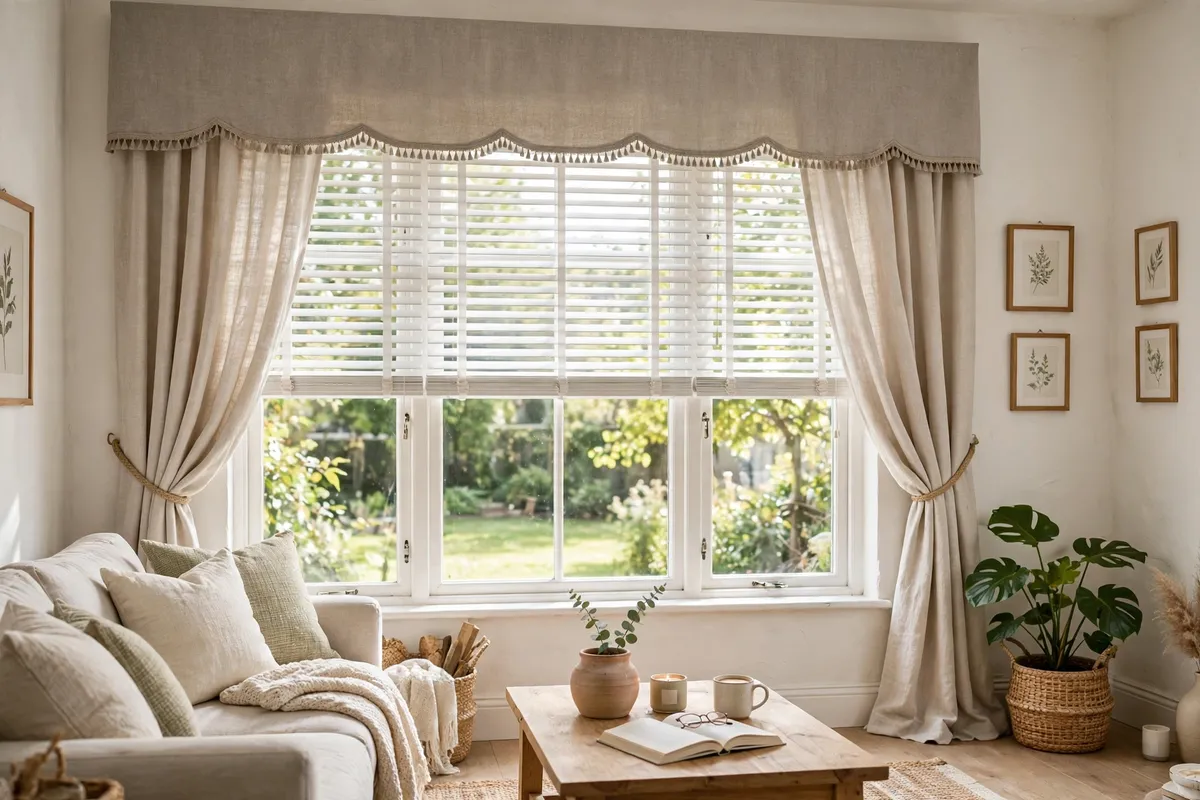
A window treatment is any covering, dressing, or frame added to a window to control light, privacy, temperature, and style. It can be as simple as a sheer curtain or as structured as wooden shutters. In short, if it is fitted to a window to make it work better or look better, it is a window treatment.
Most people use the phrase loosely, but the meaning is broad on purpose. Blinds, shades, curtains, drapes, shutters, valances, and cornices all belong in the same family, even though they look and work very differently. That is why asking what is a window treatment is a useful starting point: it helps you compare options before you buy one product.
What Is a Window Treatment, Exactly?
At its simplest, a window treatment is a functional and decorative layer for a window. Functionally, it filters sunlight, blocks a view from outside, reduces glare, and can add insulation. Decoratively, it softens hard edges, adds colour and texture, and helps a room look finished rather than bare.
A window treatment is not the same thing as a blind. A blind is only one type. Likewise, curtains are not the whole category. Think of window treatment as the umbrella term, and blinds, shades, and drapes as the choices underneath it. Some treatments sit inside the window frame, some hang outside it, and some are layered together for both looks and performance.
Hard and Soft Window Treatments
Designers usually divide treatments into hard and soft types. Hard window treatments are made from rigid materials such as wood, faux wood, aluminium, or vinyl. Blinds and shutters are the main examples. They are durable, easy to wipe clean, and give precise control over light through slats or louvers.
Soft window treatments are made from fabric. Curtains, drapes, sheers, Roman shades, and valances fall into this group. They add warmth, movement, and sound softening, but they need more cleaning and care. Many rooms work best with a mix: a hard treatment for everyday control, plus a soft layer for style.
The Main Types of Window Treatments
Each type has a different strength. The right choice depends less on fashion and more on what you need that window to do.
Blinds
Blinds use horizontal or vertical slats that tilt open and closed. Wood blinds feel warm and traditional, faux wood suits humid rooms such as kitchens and bathrooms, and aluminium or vinyl blinds are light, affordable, and easy to clean. Blinds are a strong choice when you want fine control over glare without losing all daylight.
Shades
Shades are a single panel of fabric or woven material that rolls, folds, or stacks when raised. Roller shades are clean and minimal, Roman shades fold into soft pleats, cellular or honeycomb shades trap air for insulation, and solar shades cut glare while keeping a view. Shades suit modern rooms and windows where you want a smooth, uncluttered look.
Curtains and Drapes
Curtains are lighter fabric panels, while drapes are usually heavier, lined, and more formal. Both hang from a rod and can be drawn across the window or pulled to the sides. They soften a room, improve acoustics, and, when lined, add privacy and insulation. Floor-length panels hung high and wide can also make a window look larger.
Shutters
Shutters are solid panels with adjustable louvers, fitted inside or just outside the window frame. Plantation shutters are the best-known style. They are durable, add a built-in look, and work well for street-facing windows, although they cost more and take longer to install than blinds or curtains.
Valances and Cornices
Valances are short fabric treatments that cover only the top of a window, while cornices are rigid, usually upholstered, boxes that do the same job. They hide hardware, add a finished top edge, and are often layered over blinds or shades. On their own, they do not provide privacy or block much light.
Sheers and Layering
Sheer curtains filter light and soften a view without making a room dark. Layering is the key idea here: a sheer plus a blind, or a shade plus drapes, gives you daytime softness and nighttime privacy from the same window. Layering also lets you change the mood of a room without changing the whole treatment.
Window Treatments at a Glance
| Type | Best for | Light control | Privacy |
|---|---|---|---|
| Blinds | Everyday glare control | Excellent, with tilting slats | Good when closed |
| Shades | Clean, modern rooms | Good to excellent | Good, better with blackout fabric |
| Curtains and drapes | Warmth and softness | Moderate, depending on fabric | Good when lined or closed |
| Shutters | Durable, built-in look | Excellent, with adjustable louvers | Excellent when closed |
| Valances and cornices | Finishing a layered look | Low on their own | Low on their own |
How to Choose the Right Window Treatment
Start with function, then choose fabric and style. A beautiful treatment that fails at its main job will disappoint you every day.
Light. For a sunny room, choose tilting blinds, solar shades, or lined drapes you can adjust through the day. For a bedroom, blackout shades or lined drapes help with sleep.
Privacy. Street-facing and ground-floor windows need more coverage. Top-down or bottom-up shades let light in from above while blocking eye-level views, and lined curtains give full coverage at night.
Insulation. Cellular shades, lined drapes, and shutters help reduce draughts and heat loss. Fit matters here: a treatment that leaves large gaps around the frame will insulate far less well.
Room and use. Kitchens and bathrooms need moisture-resistant materials such as faux wood or vinyl. Living rooms can carry softer, more decorative fabrics. If you are refreshing a tired room, see how to turn outdated spaces into luxury havens without breaking the bank for ideas on where window treatments fit into a wider update.
Budget and style. Ready-made blinds and curtains cost far less than custom shutters or lined drapes, but custom sizes suit wide or tall windows better. Keep the treatment consistent with your room: clean lines for modern spaces, richer fabrics for traditional ones. For a practical checklist before you buy, read 5 must-know tips to improve your home safety, especially the advice on choosing safer, cordless options for homes with children and pets.
The Extra Angle: Do a 10-Minute Window Audit First
Most buying guides start with products. Start with the window instead. This short audit, which competitors usually skip, prevents the most common and expensive mistakes.
First, check sun direction and time of day: a west-facing window needs glare control in the afternoon, while a north-facing window mainly needs privacy and warmth. Second, check how the window opens: cranks, handles, and inward-opening sashes can clash with inside-mounted blinds or shutters. Third, check the rules: renters may need tension rods, clip-on shades, or other no-drill options, and listed or rented homes may limit permanent fixings. Fourth, choose cordless, motorised, or wand-operated controls if children or pets use the room, and keep any cords out of reach. Finally, measure width and height in three places and use the smallest measurement, because windows are rarely perfectly square.
The same audit helps with awkward windows. For doors, choose treatments that move with the door or sit clear of handles. For skylights, look for motorised or pole-operated shades. For bay windows, treat each section separately rather than forcing one panel across an angle. This is also where four window treatment mistakes you should avoid becomes useful reading: measuring, mounting height, and fabric choice are exactly where rushed purchases go wrong.
Common Mistakes to Avoid
Do not hang curtains just above the frame if you want height: mounting higher and wider usually looks better and lets in more light when open. Do not choose white fabric for a kitchen window without checking washability. And do not order before checking clearance for handles, radiators, and furniture, because a treatment that cannot open fully is a treatment you will stop using.
Frequently Asked Questions
What is a window treatment in simple terms?
It is any covering or dressing for a window, such as blinds, shades, curtains, shutters, or a valance, used to control light and privacy and to improve how the room looks.
Are window treatments the same as blinds?
No. Blinds are one type of window treatment. The wider term also includes shades, curtains, drapes, shutters, sheers, valances, and cornices.
What is the most popular type of window treatment?
Blinds and roller shades are among the most popular because they are affordable, versatile, and easy to operate. Curtains and drapes remain popular for living rooms and bedrooms, where softness and style matter more.
Do window treatments help with insulation?
Yes, especially cellular shades, lined drapes, and well-fitted shutters. They reduce draughts and heat transfer, but fit and fabric matter: loose, unlined treatments give only a small benefit.
How do I measure for window treatments?
Measure the width and height in three places, use the smallest measurement, and decide first whether you want an inside or outside mount. Inside mounts need a deep enough frame; outside mounts cover more of the wall and block more light at the edges.
Choose the treatment that solves your main problem first, whether that is glare, privacy, heat, or style, and then layer for looks. Measured well and fitted with care, a good window treatment quietly improves a room every single day.